
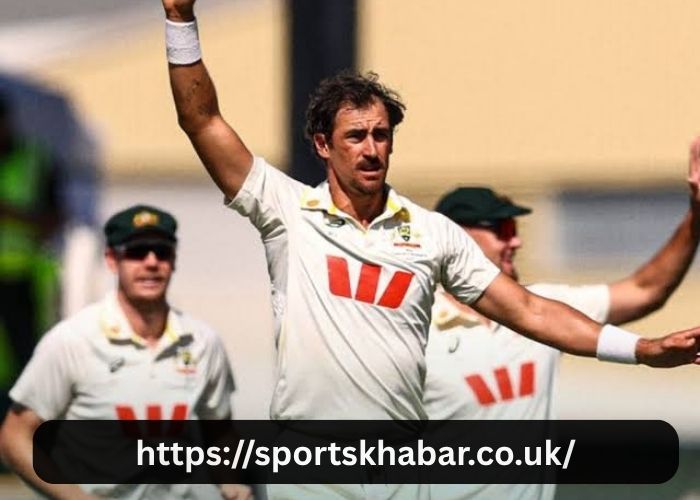
Victorian and New South Wales cricketers met a touring English side from Melbourne for what became known as the first Test match, held on March 18, 1877.
Bangladesh’s amazing win in Darwin has sent shockwaves through the Australia National Cricket Team and Australia. That’s why its unexpected victory so outraged so many.
| No. | Player | Role |
|---|---|---|
| 1 | Xavier Bartlett | Bowler |
| 2 | Scott Boland | Bowler |
| 3 | Alex Carey | Wicketkeeper-Batter |
| 4 | Pat Cummins | Bowler / Captain |
| 5 | Brendan Doggett | Bowler |
| 6 | Nathan Ellis | Bowler |
| 7 | Cameron Green | All-rounder |
| 8 | Josh Hazlewood | Bowler |
| 9 | Travis Head | Batter |
| 10 | Josh Inglis | Wicketkeeper-Batter |
| 11 | Matthew Kuhnemann | Bowler |
| 12 | Marnus Labuschagne | Batter |
| 13 | Nathan Lyon | Bowler |
| 14 | Mitchell Marsh | All-rounder |
| 15 | Todd Murphy | Bowler |
| 16 | Michael Neser | All-rounder |
| 17 | Steve Smith | Batter |
| 18 | Mitchell Starc | Bowler |
| 19 | Jake Weatherald | Batter |
| 20 | Beau Webster | All-rounder |
| 21 | Adam Zampa | Bowler |
| No. | Date | Format | Opponent | Venue | Result |
|---|---|---|---|---|---|
| 1 | Jun 14, 2026 | ODI | Bangladesh | Mirpur | Australia won by 1 wicket |
| 2 | Jun 11, 2026 | ODI | Bangladesh | Mirpur | Bangladesh won by 5 wickets (DLS) |
| 3 | Jun 9, 2026 | ODI | Bangladesh | Mirpur | Bangladesh won by 86 runs (DLS) |
| 4 | Jun 4, 2026 | ODI | Pakistan | Lahore | Pakistan won by 4 wickets |
| 5 | Jun 2, 2026 | ODI | Pakistan | Lahore | Australia won by 41 runs |
| 6 | May 30, 2026 | ODI | Pakistan | Rawalpindi | Pakistan won by 5 wickets |
| 7 | Feb 20, 2026 | T20I | Oman | Kandy | Australia won by 9 wickets |
| 8 | Feb 16, 2026 | T20I | Sri Lanka | Kandy | Sri Lanka won by 4 wickets |
| 9 | Feb 13, 2026 | T20I | Zimbabwe | Colombo | Zimbabwe won by 5 wickets |
| 10 | Feb 11, 2026 | T20I | Ireland | Colombo | Australia won by 67 runs |
Origins
James Lillywhite led an English team to Australia for its inaugural test match, lasting just one day and featuring only eight ball overs played.
The decade was also notable for Australia’s historic victory against West Indies team in 1987, which marked an Australian dominance that would last until 2005. At this point, Queenslander Allan Border became highest run scorer ever while Shane Warne and Glenn McGrath became household names.
Australian Cricket Council was established in 1905 with representatives from New South Wales, Victoria and South Australia plus one delegate each from Tasmania and Queensland.
In 2003 it merged with Cricket Australia, continuing as the country’s single governing body while simultaneously initiating women’s domestic Twenty20 competitions.
First Test match
In May 1878, Lord’s hosted its inaugural Test match between an Australian team and a touring Marylebone Cricket Club eleven. Led by Wollongong-born David Gregory (1845-1919) from New South Wales and Victoria players, David Gregory led his side to victory by nine wickets; fast bowler James Spofforth claimed seven wickets during each innings of their win.
Australia has long been considered the home of Ashes cricket and, since its introduction, has dominated international competition. Notable Australian cricket players include Donald Bradman, Victor Trumper and Shane Warne; additionally they won the 2007 World Cup held in the Caribbean region; their most recent triumph being an emphatic 5-0 whitewash over India in 2023; in 2004 Australia also became world number one for both ODI and Test cricket competitions.
Second Test match
Australia will hope to right the ship during their second Test match, commencing Saturday. Australia have made changes to their 13-man squad following Jake Weatherald’s omission from their 13-man squad and left-hander Matthew Renshaw has been included as his replacement if selected;
Renshaw would make his Test return after more than three years since last playing against India at Delhi 2023. Marnus Labuschagne remains as their regular No.3 batter, however Australia coach Andrew McDonald admits they still have plenty to prove following a score of 23 and zero during their debut game; back-up wicketkeeper-batsman Josh Inglis and reserve bowler Scott Boland have also been retained within their 13 man squads.
Australia will be without Mitchell Starc and Peter Handscomb due to injury in this matchup.
Third Test match
Australia bowlers dominated on the final day in Adelaide as Jofra Archer and Scott Boland claimed all three England wickets to seal an insurmountable series victory for Australia. Tim Paine declared on 267-8 despite England captain Joe Root and Will Jacks’ efforts, who together shared an unbroken 50-run stand to bring down the required run rate below 100.
Nathan Lyon and Mitchell Starc’s late new-ball spell ensured England never recovered, with Jacks falling attempting to slog sweep back into play off Starc and Marnus Labuschagne taking two stunning slip catches to end the match – ending England’s dismal Ashes campaign while giving Australia an unassailable 3-0 advantage in the five-match series.
Fourth Test match
England captured their first Test victory since 2010/11 in Australia for the first time in more than six years on Saturday by chasing down 175 on an unpredictable pitch and scoring an unlikely two-day victory on an Australian tour which had seen 18 defeats over six tests so far this year. Brydon Carse and Ben Stokes each took four wickets while Harry Brook excelled with bat.
Joe Root has now completed 18 Tests without winning in Australia without loss and now boasts an ominous smile, though that could quickly dissipate when facing off against Australia’s Barmy Army at home. Although madcap fare, this match still delivered what many feared wouldn’t: Australia’s review for catch behind proves fruitless when Brook slaps it away to a boundary!
Sixth Test match
Test matches are five-day cricket matches played between teams that are full members of the International Cricket Council. The inaugural Test match took place at Melbourne Cricket Ground in 1877 between Australia and James Lillywhite’s touring England XI; since then many matches have been known as tests, though commercial “Supertests” organised by Kerry Packer from 1971-72 or between Australia and a World XI from 1977 to 1979 may not be officially recognized as such.
Bangladesh’s victory in Darwin marked one of the biggest shocks and biggest upsets ever witnessed internationally, confounding all pre-game odds. This stunning triumph proved that nations with potential must be given space and time to develop in the game without being treated with contempt; Australia will no doubt feel frustration but can only lay blame upon themselves.
Seventh Test match
Test cricket is the highest form of international cricket and is played between teams that are full members of the International Cricket Council. The inaugural Test match was played at Melbourne Cricket Ground between James Lillywhite’s team of English professional players and an Australian combined XI; this match would become known as The Ashes; since then all matches between England and Australia have come to be known by this name.
Australia’s batters face an uphill struggle after they suffered an emphatic defeat at Darwin. A former great believes Matt Renshaw possesses both the temperament and technique to succeed at Test level; however, Mehidy Hasan Mahmud was instrumental in derailing any chance of salvaging this game for Australia with his 5-66 performance on Day Four putting Australia into an extremely tenuous situation.
Eighth Test match
No one expected Bangladesh to defeat Australia in their inaugural Test match, yet they managed to do it. Bangladesh took control in the second innings before holding it until day five’s final session – all-rounder Cameron Green made an admirable 104, but once he fell victim to spinner Mehidy Hasan Mahmud it all but ended their chances.
Test matches are series of cricket matches between two teams with equal rank that typically take place over multiple days and compete for an prized trophy. Performances at Test matches count towards both first-class cricket statistics as well as Test cricket stats, giving an insight into both types of play.
Before 2012, all Test matches were played during daylight hours with a red ball. But due to viewership decline and concerns of visibility issues, day/night Tests were introduced using pink balls and lighting aids for greater visibility during these evening games.
Ninth Test match
Following their shock defeat against Bangladesh, Australian batters are being called upon for change – though coach Andrew McDonald remains confident Marnus Labuschagne can transform his batting.
Test matches between international teams of eleven players span five days and can last anywhere between four hours and four hours and 50 balls, with both batting and bowling rotations taking place throughout each innings and over. Each innings can last between four hours and four hours and each over is limited in terms of balls played per over.
In 1877, England hosted its inaugural Test against a team selected by James Lillywhite. Subsequent reciprocal tours established the current pattern of Test cricket.
The Australia National Cricket Team has since played a central role in the history and development of Test cricket. Kerry Packer’s World XI did hold commercial “Supertests” between 1971 and 1972, which are not officially counted among their official Test matches; nonetheless, some cricket writers and statisticians continue to disregard this ICC ruling.
Also Read : India National Cricket Team Vs Australian Men’s Cricket Team Players
 Vikrant Gupta